You sit down at your desk, open your laptop to review lecture slides, and twenty minutes later you're three links deep into a Wikipedia rabbit hole or refreshing group chats. The gap between intending to focus and actually doing it is exactly where grades slip and deadlines creep up. Willpower alone rarely bridges that gap. Focusly steps in right here—it’s a Pomodoro timer designed to lock your focus and level up grades by shifting the burden of self-discipline from your brain to a planned, external routine.
How Focusly Changes a Study Session
Instead of vaguely deciding to "study for a few hours," you open Focusly and define the block before you start. Let’s say you have a calculus midterm coming up. You set three 25-minute Pomodoro cycles specifically labeled for integration practice. Once that timer starts ticking, the app creates a hard boundary. You aren't just passively studying; you're working against a micro-deadline you set yourself. That countdown forces you to prioritize the actual math problems instead of reorganizing your desk or tweaking your playlist. When the break hits, you actually step away because the app prompts you, rather than burning out halfway through an unplanned two-hour slog.
The same mechanism applies to longer deep work sessions. Writing a literature review or a lengthy project report invites constant pauses because the task is unstructured and mentally heavy. Using Focusly to plan out two 50-minute deep work blocks gives your brain a predictable rhythm. You write until the timer tells you to stop, not until you feel "stuck." That physical interruption often prevents the spiral of opening a new browser tab when a sentence doesn't come easily. The planned break gives you permission to step away without guilt, making it easier to dive right back in for the next block.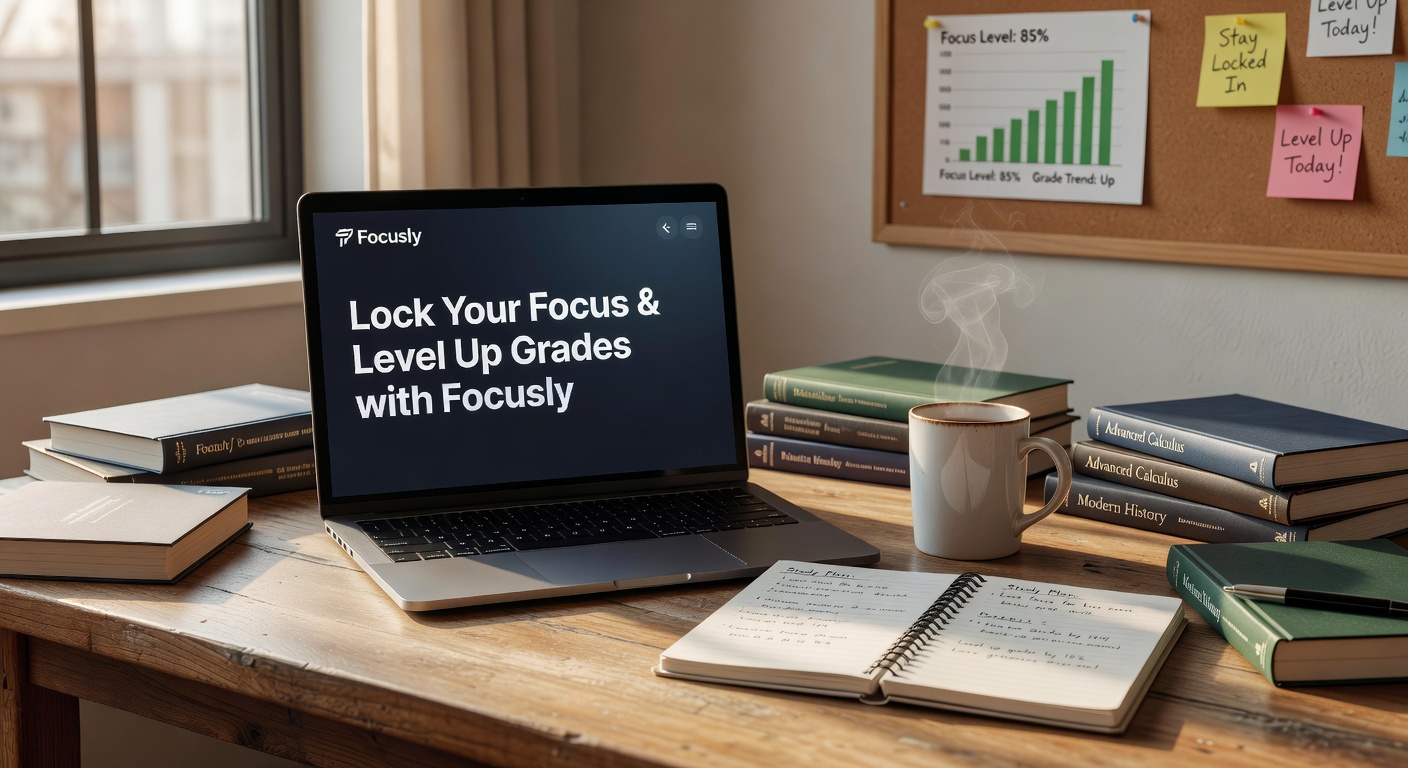
Is Focusly the Right Fit for Your Study Habits?
Every focus app has a distinct mechanism, and the tradeoff here is about the type of friction it introduces. Focusly relies on the Pomodoro method and session planning to keep you on track, but it doesn't physically lock your phone or block websites like Freedom or Cold Turkey do. If your primary issue is reflexively opening social media the second you hit a tough paragraph, Focusly's timer acts as a psychological nudge, not a digital wall. You still have to choose to obey the timer.
That makes it highly effective for people who need structure and rhythm rather than a forced quarantine. If you work well once you get started but struggle to initiate, the planning phase in Focusly solves that exact problem. However, if you have a severe phone-scrolling habit, pairing Focusly with an actual screen-time blocker might be the realistic combo you need. Compared to gamified timers like Forest, Focusly skips the tree-growing animation in favor of a cleaner, work-first interface. It’s less about rewarding you with a virtual garden and more about giving you a clear, undistracted dashboard for your actual output.
Building a Rhythm That Sticks
A single focused afternoon feels great, but consistent focus is what actually pulls grades up over a semester. Focusly tracks your completed sessions, giving you a blunt look at your real work volume. Seeing that you consistently hit four deep work blocks on Tuesdays but fall apart on Thursdays helps you adjust your schedule based on reality, not optimism. It turns vague anxiety like "I need to study more" into a concrete action: "I need to protect my Thursday mornings from distractions." Tracking those sessions in Focusly makes your study habits measurable, so you can patch the leaks in your weekly routine instead of just stressing over them.
Locking your focus isn't about superhuman discipline; it's about removing the ambiguity from your study time. Focusly gives you the framework to plan sessions, enforce breaks, and build a work rhythm that doesn't rely on fleeting motivation. If your current study sessions are constantly hijacked by distractions or drag on without structure, replacing open-ended study time with a planned Focusly block is a practical shift that directly translates into better grades and actual deep work.
Comments
Leave a Comment