Context switching kills productivity more than the actual length of a break. You lose the thread of what you were doing, and getting back into it takes twice as long as the distraction itself. Most pomodoro apps just count down 25 minutes and ring a bell. That’s fine if you already have the discipline to ignore your inbox, but for the rest of us, a ticking clock doesn’t stop the urge to swipe over to Slack or check notifications. I started looking into Focusly Deep Work because I needed something that actually interrupted my distraction loops, not just my work loops. Standard timers tell you when to stop working; they do nothing to keep you working.
The difference with Focusly starts before the timer even runs. Instead of just hitting "start" and hoping for the best, the app makes you set up a session. You decide what you’re working on and how long you plan to stay in it. It sounds minor, but declaring intent before you start forces a micro-commitment. I tested this during a typical afternoon slump—usually the time I let tasks drift and bounce between emails and documents. Setting a specific 45-minute block for a single design review made me sit down and actually open the file instead of tab-hopping. The act of naming the session changed how I approached the next hour.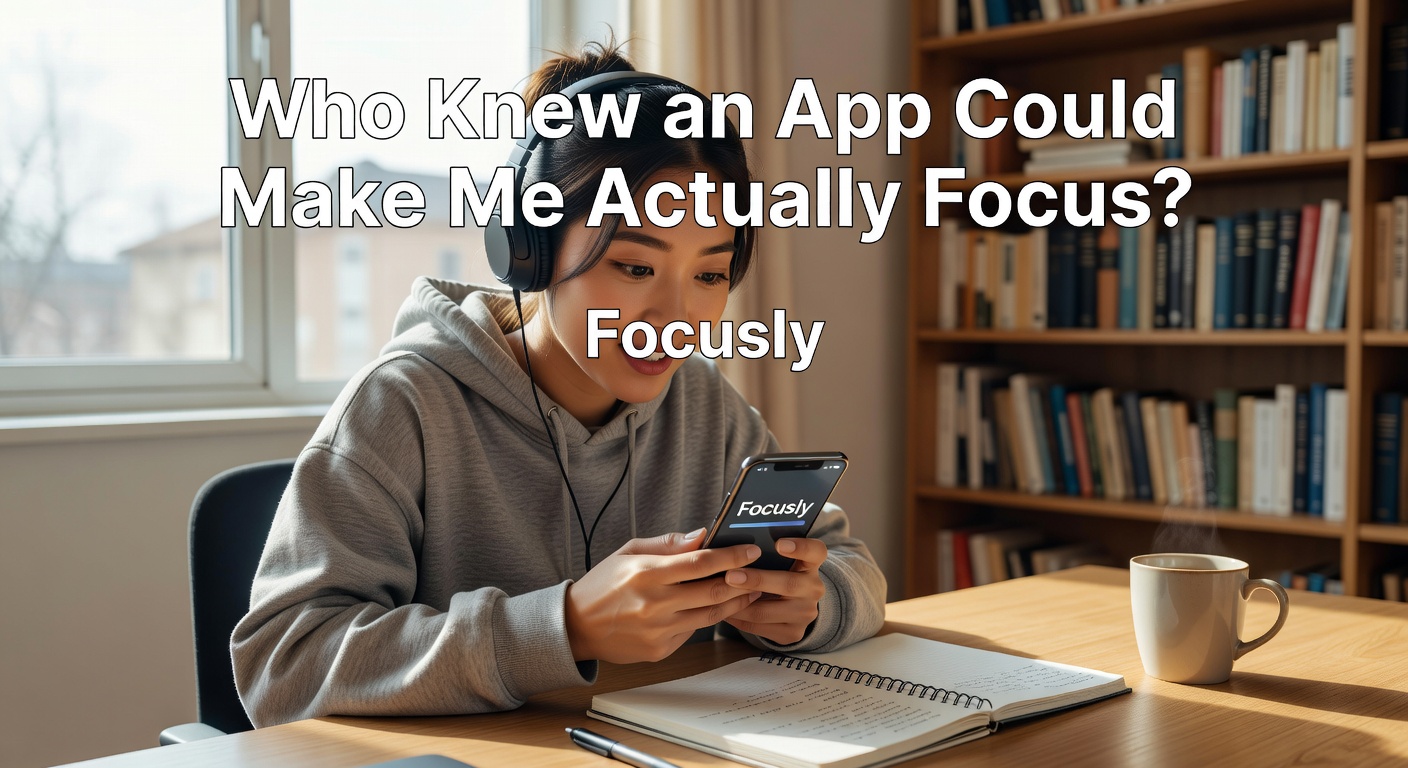
How Focusly handles the distraction problem
Once the session is running, Focusly leans heavily into the "deep work" part of its name. It doesn't just minimize itself and hide in the background; it stays present as a visual boundary. If you try to navigate away or pick up your phone to check a random notification, the interface reminds you that you’re supposed to be focused. It’s a gentle but firm nudge.
During a late-night study session, I caught myself instinctively reaching for Instagram. Seeing the Focusly timer staring back at me was enough to make me put the phone down. It replaces the abstract guilt of "I should be working" with a concrete, visible barrier. Another time, while writing a long report, I felt the itch to open a new browser tab to "research" something unrelated. The active session screen made me pause, realize it was just a distraction urge, and get back to the draft. It acts like a speed bump for bad habits.
The tradeoffs and realistic alternatives
Here’s the catch: Focusly is still an app on your phone or computer. If your distraction habit is deeply ingrained, no visual reminder will stop you from overriding it and opening TikTok anyway. You still have to want to focus. The app provides the structure and the friction, but you provide the baseline willpower. If you are someone who completely lacks that baseline, an app alone won't fix the issue.
You also have to consider what kind of system works for you. If you just need a basic countdown, your phone’s built-in clock is free and does the job without any extra setup. If you need gamified pressure to stay off your phone, Forest plants virtual trees that die if you leave the app. Focusly sits somewhere in the middle—it’s more structured than a basic timer but less gimmicky than a game. It works best if you’re someone who responds well to visual boundaries, pre-planned routines, and slight friction rather than external punishment.
The desktop vs. mobile experience also matters. Running Focusly on a computer while working is great because the screen presence is constant. On a phone, it’s easier to bypass the app out of sheer muscle memory. If you do most of your deep work on a laptop, keep the app running there rather than relying on your phone screen to save you from your phone.
Focusly won't magically fix a scattered attention span, but it does make the mechanics of deep work easier to stick to. By forcing you to plan the session and actively blocking the impulse to switch tabs, it removes the low-level friction that usually breaks your rhythm. If you’ve tried the standard 25-minute timers and still end up distracted halfway through, Focusly Deep Work is worth a look to see if a stricter boundary actually changes your output.
Comments
Leave a Comment