You sit down to study. You open your laptop. Your notes are ready. Then your phone buzzes. You check it. Twenty minutes later you're watching a video about a coffee shop in Tokyo. That study session? Gone. This is the problem Focusly tries to fix. It’s not just a timer. It’s a system for reclaiming your work rhythm when your brain wants to do anything but focus.
The Real Problem Isn't Laziness, It's Structure
Before I started using Focusly regularly, my approach was a mess. I would block out two hours, sit down, and tell myself to “concentrate.” By minute eight, I was twitching. You probably know this feeling. It’s not that you lack discipline. It’s that your brain hasn’t committed to a pattern. Focusly handles this by forcing two simple decisions upfront: how long you want to work, and when you get to stop. That small act—committing in advance—changes the dynamic. You’re not staring an endless mountain of work. You’re agreeing to a single, manageable block of time.
One Concrete Scene: The Last-Minute Essay
I had a 2,000-word draft due. I was avoiding it. I opened Focusly, set a 25-minute deep work session, and told myself I could stop after that. The first five minutes were painful. But just at the point where I’d normally open Twitter, the timer was still running. I didn’t stop. The session ended, and I had written 300 words. Not perfect, but I was in motion. That’s the key. The app gets you past the starting line.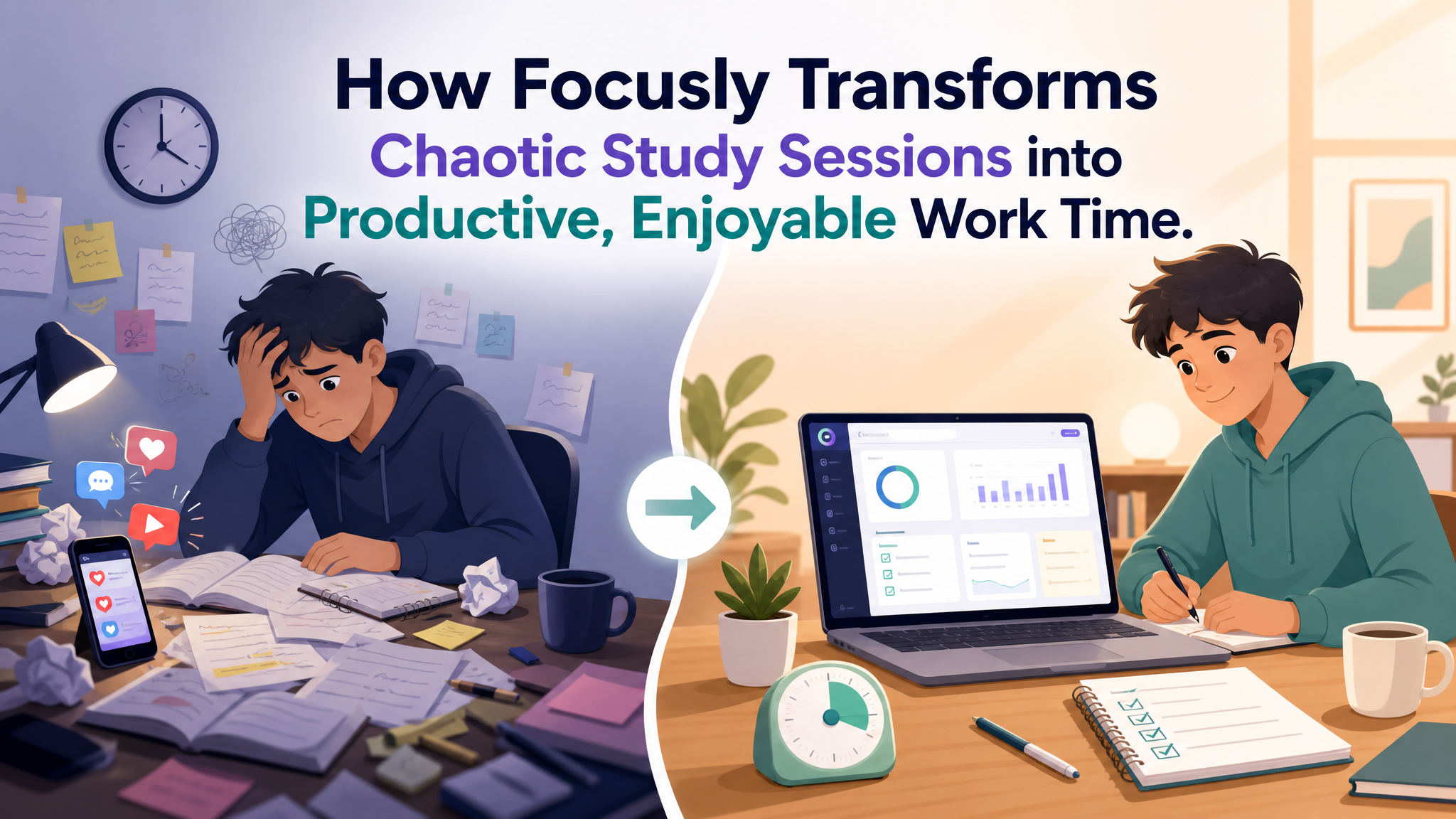
Where Focusly Changes the Experience
What makes Focusly different from a standard timer app is the planning layer. You don't just hit start and hope. You can map your day: three study blocks, a short break, a creative block. This lets you see your workload visually. For someone with multiple tasks or subjects, that roadmap is calming. You stop asking “what should I do next?” and just follow the plan you made earlier.
Another specific observation: the app has some simple distraction-blocking tips baked into the flow. It reminds you to silence your phone or close extra browser tabs at the start of a session. It sounds basic, but when the time is counting down, you’re less likely to interrupt yourself. The structure does the willpower work for you.
The Tradeoffs: It’s Not Magic
Focusly does one thing well. But it’s not a perfect tool for every situation. Let’s be realistic.
- If your work is highly interruptible by nature (waiting for messages, answering questions), the strict focus interval might frustrate you. You’d be stopping your timer constantly. That kills the rhythm. This app works best when you can control your environment for at least 20 minutes.
- It won’t fix your procrastination if the task is truly awful. The app helps you start. But if you absolutely detest the work, even a 15 minute timer can feel like an hour. Focusly gives you a structure. It doesn't make boring work fun.
- The planning layer takes a tiny bit of upfront effort. Some people just want to hit a single button and go. Adding one more step to your routine is a barrier. If you’re the type who barely opens a to-do list, you might skip the planning and just use the basic timer. That’s fine, but you’ll miss some of the benefit.
I noticed that on days when I skipped the planning step and just used Focusly as a random timer, my sessions felt less purposeful. The real productivity came from the pair: a plan for the day, then a timer to execute it.
Who Should Think Twice
If you already have a strong work routine and just want a minimal timer, Focusly might feel like overkill. The extra features could distract you from the work. Also, if you hate any kind of pre-planning—if you prefer deep flow by spontaneous mood—the app’s setup process could feel like friction. You might be better served by a simpler, bare-bones stopwatch or a notebook. This tool is for people who need help structuring their time, not for people who already have a perfect internal clock.
In my own use, Focusly turned scattered evenings into focused chunks. Not every session was great. But I started finishing tasks instead of just starting them. That’s a real outcome, not a marketing promise.
Comments
Leave a Comment