Let's be real: you didn't spend weeks picking out that crusty leather chair and installing dim warm lighting just to scroll TikTok on your phone. The vintage library aesthetic is a vibe, but for most people, it's a decoration, not a productivity system. If you actually want to turn that space into a deep work fortress, you need to think like a restoration expert — not an interior decorator.
The problem isn't the furniture. It's that your brain associates "cozy corner" with "relaxation mode." You sit down, the lamp glows, the books smell like dust and ambition, and ten minutes later you're checking your phone because there's no structure. Vintage is romantic, but romance doesn't finish your project.
So here's the real move: treat your library like a tool. Restore it for function, not just looks. Step one is killing the noise — both literal and digital. Physical noise you can fix with curtains and rugs. Digital noise is harder. That's where something like Focusly Deep Work comes in. It's a Pomodoro-style app, but what makes it different for this specific setup is that it plans your sessions instead of just timing them. You tell it: "I'm going into the library for 90 minutes, here's what I'm working on." It blocks distractions, sets the rhythm, and honestly, it creates a psychological handshake between your vintage environment and your actual output.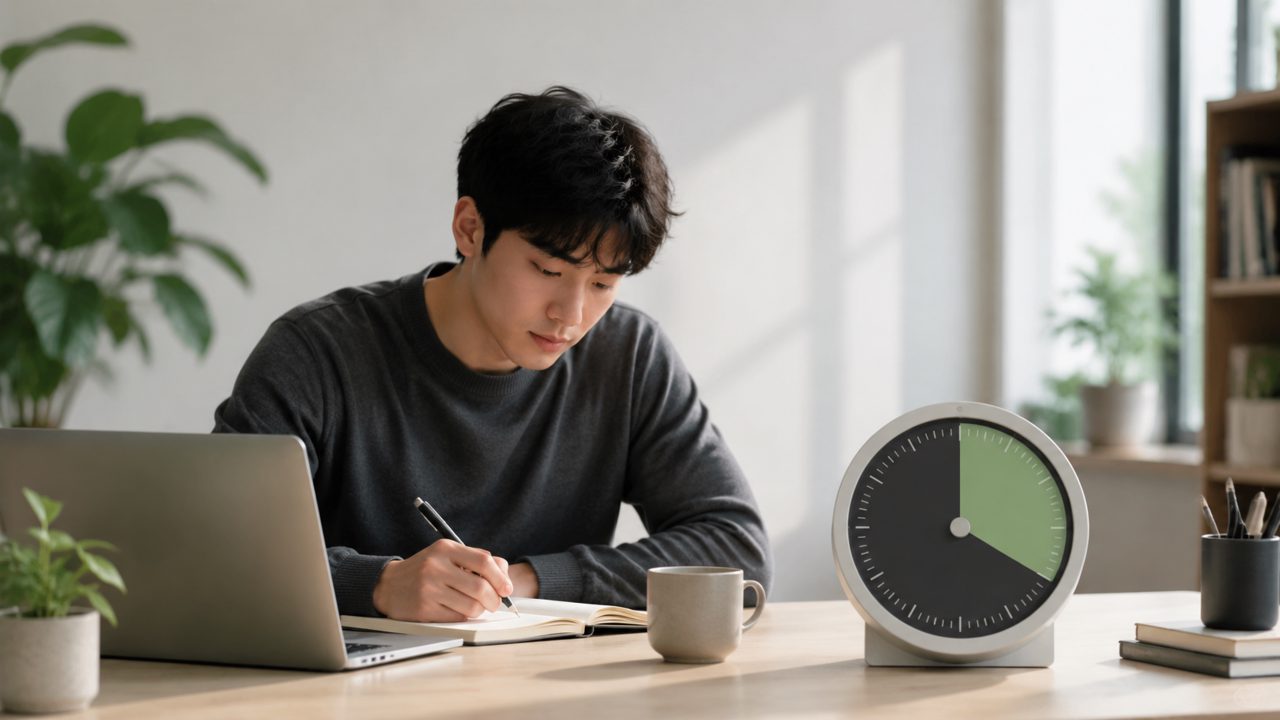
You're not lazy. You're just missing the right constraints
I've tested this setup with a few friends who also tried to "aesthetic-ify" their workspace. One guy has a gorgeous 1920s desk, a typewriter, and three books on attention economics. He was getting nothing done. The issue wasn't motivation — it was that his brain saw the library as a place to feel productive, not to be productive. Once he added a structured focus routine (with Focusly planning his sessions), the room started working for him. He'd sit down, start a 50-minute focus block, and the app's interface replaced his wandering thoughts with a clear target. The vintage backdrop became the setting, not the main character.
Another scenario: someone uses their library for late-night reading but also wants to study there during the day. The lighting changes, the mood shifts, but the environment stays the same. That's confusing for your brain. The cheat code is to use a digital trigger — like a specific Focusly playlist or a start-session ritual — that tells your mind "we're in focus mode now, not browsing mode." It's cheap psychology but it works.
The tradeoff you need to accept
Here's the part nobody tells you in those "how to build a cozy library" blog posts: vintage spaces are bad for deep work in some ways. Old furniture is uncomfortable for long sessions. Warm lighting strains your eyes after two hours. The ambiance that feels inspiring for 20 minutes becomes a distraction at minute 45. You can't romanticize your way out of a sore back.
So the tradeoff is real. You can have the aesthetic or you can have the output — but you need to intentionally bridge them. A restored vintage library works best as a session space, not an all-day desk. Use it for one or two deep focus blocks per day, with clear boundaries. Plan those blocks using a tool like Focusly, which literally counts down your time and forces you to commit. After the session ends, leave the room. Don't stay there to "relax" — you'll just blur the lines again.
Alternatively, if you're someone who can't separate a beautiful environment from the urge to lounge, skip the full vintage rebuild. Get one vintage chair, put it in a more neutral room, and use that as your focus seat. But if you already have the library, don't tear it down. Just reset your expectations: it's a focus room, not a living room.
How to know if this is for you
If you get distracted by your own space, if you find yourself rearranging books instead of writing, if the vibe matters more to you than the results — then the vintage library experiment will fail without a system. But if you're willing to treat it as a stage for structured work, and you pair it with a reliable planning tool like Focusly Deep Work, you can actually turn that dusty dream into your highest-output zone. The question isn't whether the room looks good. It's whether you can sit down and stay there.
Comments
Leave a Comment